Ehsaas Scholarship is one of the most significant undergraduate programs in Pakistan that helps to eliminate the low literacy rate of the country. The government decided to eliminate this issue with the Ehsaas Scholarships program by giving scholarships to students who are capable but can’t afford higher education.
The Pakistani government prioritizes working on such programs that give the push to grant access to people who can’t afford higher education and also promote gender equity. In Ehsas Scholarship 2019 fifty-percent quota was reserved for the country’s female students. Ehsaas scholarship 2022 last date is 31st Dec 2022.

Launch of Ehsaas Scholarship
Prime Minister Imran Khan launched Ehsaas Undergraduate Scholarship Program for underprivileged and needy students in Pakistan. All students enrolled in any of the one-hundred and twenty-nine public universities accredited by the Higher Education Commission (HEC) and have less than forty-five thousand family income are eligible to apply.
This scholarship amount is four thousand per month besides covering a hundred percent tuition fee. Ehsaas scholarship form is available at the HEC portal.
Ehsaas Scholarship Phase 3
Federal Government launched the Ehsaas Scholarship Phase 3 following the end of Phase 1 and phase 2. This scholarship was open to students enrolled in morning sections of BS programs.
Criteria for Applying for Ehsaas Scholarship Program
Ehsaas scholarships 2022 are available for:
- Students who have been newly enrolled in HEC-recognized government sector universities.
- Students who meet the project’s eligibility requirements and submit the genuine data that is needed.
- Admission is granted only on a merit basis.
- Degree programs that have been approved by HEC.
- The maximum age for qualifying for this scholarship is exactly the same as the maximum age for seeking admission in the HEI’s undergraduate programs.
All candidates must apply before ehsaas scholarship last date.
Ehsaas Program Ineligibility Conditions
The following conditions will make the candidate ineligible:
- The student is taking advantage of another scholarship or ongoing funding
- Enrollment in distant learning courses and affiliated public and private colleges
- Gained admission in evening programs with higher fees or on a self-support, self-finance, or self-sustain basis
- Ehsaas Scholarships are not available to students enrolled in 2-year post-higher secondary or similar programs, 2-year associate degree programs, BA/BSc, and Master’s programs.
- Additionally, students with associate degrees who have just enrolled in the fifth semester of a parallel under-graduate degree are ineligible.
Ehsaas Scholarship Benefits
Ehsaas Scholarship by HEC is only for regular students. Open-merit students may be eligible for an undergraduate Ehsaas scholarship. A monthly stipend will be given to selected students to cover their educational expenses. In universities, there are 50 percent seats for female students.
How to Apply for Ehsaas Scholarship
- http://ehsaas.hec.gov.pk/hec-portal-web/auth/login.jsf. Click the link and apply.
- The financial aid branch of the relevant university will receive the application form.
- Do not send the form to BISP or HEC directly.
- Ehsaas scholarship 2022 merit list will be available at Ehsaas scholarship portal.
Universities Awarding Ehsaas Scholarship
The list of universities awarding this scholarship includes:
Sindh
- Sindh Agriculture University
- Dawood UET Karachi
- Sukkur Institute of Business Administration
- Quest Nawabshah
- Benazir Bhutto Shaheed University
- The University of Karachi
- MUET Jamshoro
- Shah Abdul Latif University
- Shaheed Zulfiqar Ali Bhutto University of Law
- Dow University of Health Sciences
- Liaquat University of Medical and Health Sciences
Punjab
- GCU Lahore
- King Edward Medical University
- Government College Women University in Sialkot
- ITU (Information Technology University), Lahore
- LCWU (Lahore College for Women University)
- NTU (National Textile University) in Faisalabad
- Kinnaird College for Women in Lahore
- University of Sahiwal
- RMU (Rawalpindi Medical University)
- National College of Arts
- University of Gujrat
- Fatima Jinnah Medical University in Lahore
- PFID Lahore
- UVAS Lahore
- UET Lahore
- University of Okara
- UET Taxila
- Fatima Jinnah Women University in Rawalpindi
- Punjab University in Lahore
- University of Narowal
- University of Sargodha
- GSCWU in Bahawalpur
- Women University in Multan
- NFCEIT in Multan
- Ghazi University in DG Khan
- GCWU in Faisalabad
- GCU in Faisalabad
- IUB in Bahawalpur
- University of Mianwali
- Rawalpindi Women University in Rawalpindi
Gilgit Baltistan
- University of Baltistan
- Karakorum International University in Gilgit
Azad Jammu and Kashmir
- Kotli University, AJK
- MUST, Mirpur
- Women University, AJK
- Poonch University, Rawlakot
Baluchistan
- University of Baluchistan
- UET Khuzdar
- Bolan University of Medical & Health Sciences, Quetta
- LUAWMS Lasbela University of Agriculture Water and Marine Sciences
- Turbet University
- Sardar Bahadur Khan Women University in Quetta
Khyber Pakhtunkhwa
- COMSATS Islamabad
- Air University in Islamabad
- SZAB Medical University
- Bahria University, ISB
- Quaid-e-Azam University
- Federal University of Arts, Science & Technology
- PIEAS in Islamabad
- NDU in Islamabad
- NUST in Islamabad
- NUTEC in Islamabad
- Institute of Space Technology in Islamabad
- National University of Medical Sciences in Rawalpindi
Required Documents
The candidate has to submit the following documents:
- 1 copy of B-Form or CNIC
- 1 copy of parents or guardian CNIC
- Income evidence of guardians
- Copies of last 6 months water, telephone, and electricity bills
- Stamp paper of Rupees fifty
- One copy of the rent agreement if living in a rented house
- Copy of last deposited fee
- Copy of medical bills, if any
- Passport size photograph
- A photograph of the house’s front side
Frequently Asked Questions
Is Ehsaas scholarship still available in 2022?
Yes, the scholarship is still available for needy students in 2022. Ehsaas scholarship program 2022 last date to apply is 31st Dec 2022.
How do I apply for the Ehsaas scholarship?
Ehsaas scholarship 2022 online application option is available at https://ehsaas.hec.gov.pk.
Social Media Handle
]]>Allama Iqbal Open University (AIOU) is a government sector university in Pakistan. The university has forty-four regional campuses & centers across Pakistan. AIOU offers various educational programs including secondary school certificates, intermediate, post-graduate diplomas, B.Ed., MS/ M.Phil., Bachelor Programs, Masters, and Ph.D.
It was founded under act XXXIX by the Pakistani Parliament in May 1974. Initially, it was named ‘People’s Open University, and in 1977 it was renamed AIOU (Allama Iqbal Open University) on the eve of Allama Muhammad Iqbal‘s 1st centenary in 1977.

Allama Iqbal open University History
The university was founded in May 1974. The main goal behind establishing this university was to offer educational opportunities to the general public and to those who are unable to leave their jobs and homes. The University is accomplishing these goals since its establishment.
Progress by AIOU
Now, the working class has access to educational opportunities, and women could get an education by sitting in their homes. Additionally, it has made advancements in the area of mass education.
It is currently leading the way in the areas of technical, scientific, and professional education. It aims to connect with Pakistan’s most remote areas. Additionally, it aims to use current information technology to improve the country’s educational system and spread education within Pakistan.
Idea Behind Establishment of AIOU
Harold Wilson, the British PM, was the one who initially proposed the concept of distance learning in the UK in the late 1960s. He believed that those who may have missed out on a better education owing to job pressure and want to increase their expertise and skills in their leisure time should have access to educational facilities.
Thus, in 1969, the UK (United Kingdom) Open University was founded. Since then, the concept of open and distance learning has been widely disseminated. Throughout the world, over 60 Open Universities are working on the principle of distance learning.
When the AIOU was founded in 1974, it was the 1st Open University in Africa and Asia and the 2nd Open University in the world. Thus, it illustrates the wisdom of the policymakers. As the previous few years of university have demonstrated, distance learning has greatly complemented the efforts of the provincial and federal governments without adding to their financial load.
Allama Iqbal Open University Administration
- Allama Iqbal Open University Chancellor –President of Pakistan
- Allama Iqbal Open University Chancellor Vice Chancellor-Professor Dr. Zia-ul-Qayyum

Allama Iqbal Open University Campuses
The university has its regional campuses in the following cities:
- Multan
- Faisalabad
- Dera Ghazi Khan
- Bahawalpur
- Dera Ismail Khan
- Rahim Yar Khan
- Chakwal
- Jhang
- Gujranwala
- Jhelum
- Kasur
- Lahore
- Mianwali
- Mandi Bahauddin
- Narowal
- Rawalpindi
- Sahiwal
- Sargodha
- Sialkot
- Sheikhupura
- Vehari
- Gwadar
- Kalat
- Dera Murad Jumali
- Quetta
- Zhob
- Dadu
- Karachi
- Hyderabad
- Kandhkot
- Larkana
- Malir
- Mithi
- Thatta
- Sukkur
- Abbottabad
- Umerkot
- Chitral
- Kohat
- Mardan
- Peshawar
- Swat
- Timergara
- Gilgit
- Islamabad
- Mirpur
- Muzaffarabad
- Skardu
- Rawalakot
- Nagar
Allama Iqbal Open University Faculties
1. Faculty of Arabic & Islamic Studies
In the 1974 University Act, the Faculty of Arabic & Islamic Studies was established. It started working as an Arabic and Islamic studies institute with an Arabic & Islamic studies department. In 1998, the Institute of Arabic & Islamic Studies was granted the status of faculty. Now the following departments are part of this faculty:
- Seerat Studies
- Interfaith Studies
- Quran & Tafseer
- Shari’ah
- Hadith and Hadith Sciences
- Arabic Language and Literature
- Islamic Thought, History, and Culture
2. Faculty of Education
The Institute of Education, which was founded in 1976 shortly after the establishment of the university, gave rise to the Faculty of Education in 1984. Currently, the faculty consists of eight departments and 135 courses are offered in 30 programs. The below-mentioned departments are part of this faculty:
- Special Education
- Distance, Non-Formal, and Continuing Education
- Science Education
- Secondary Teacher Education
- Early Childhood Education & Elementary Teacher Education
- Educational Planning, Policy Studies, & Leadership

3. Faculty of Sciences
When the Faculty of Sciences was first founded in 1982, there were only 5 departments and a few basic functional and undergraduate courses. The Faculty of Sciences’ portfolio has expanded during the past 3-4 years to include 5 new departments and higher degree programs.
The majority of the faculty departments are currently working to develop and offer highly professional, scientific, and technical courses. Now, the faculty comprises of following departments:
- Mathematics
- Chemistry
- Commonwealth Youth Program
- Biology
- Environmental Sciences
- Engineering & Technology
- Statistics
- Agricultural Sciences
- Computer Science
- Environmental Design, Health, and Nutritional Sciences
4. Faculty of Social Sciences & Humanities
The Faculty of Social Sciences and Humanities, which was first founded in 1981, with just five departments, has flourished through the years to become the largest Faculty in the University.
Currently, it has fifteen departments, each of which offers degree programs at different levels in a variety of subjects, including MBA, Business Administration, Pakistan Studies, Urdu, Women Studies, Mass Communication, Sociology, Library and Information Sciences, and History in partnership with Common Wealth countries.
- Pakistan Studies
- Mass Communication
- Commonwealth MPA/MBA
- Economics
- Business Administration
- Pakistani Language
- Library & Information Science
- Urdu
- Commerce
- Gender & Women Studies
- Sociology, Social Work, and Pop. Studies
- Iqbal Studies
- History
Allama Iqbal Open University Admissions
AIOU admissions are offered twice a year i.e., during Spring and Autumn semesters. The information regarding eligibility criteria, fee structure, and programs offered are available on the website.
Degree Programs Offered at AIOU
- Secondary School Certificate
- Intermediate
- Post-Graduate Diploma
- Ed. programs
- MS/ M.Phil.
- Bachelor Programs
- Masters
- D.
Allama Iqbal Open University Courses/Diplomas
Allama Iqbal Open University students could get certificates in the following diploma/courses besides the degree programs:
- Agricultural Courses
- Technical courses
- Al-Lisan-ul-Arbi
- Arbi Bol Chaal
- French Course
- ATTC (Arabic Teacher Training Course)
- Lughatul Quran
- Diploma in Forensic Science
- Educational Leadership Course
- STEP (Agricultural Sciences, Social Science, Hotel Services, Communication Education, and Management Science)
Online Services Provided by AIOU
The university facilitates its students by providing them with online services. Students can make their accounts on the AIOU portal and then via the Allama Iqbal Open University login they could use the following services:
- Degree verification
- Date Sheet
- No Slips
- Provisional Certificate
- Assignment Marks
- Degree Tracking
- Results Detail
- Admission Information
- Inquiry About Book Dispatch
- Fee Refund
- Admission Confirmation

Allama Iqbal Open University Fee Structure
The fee structure is available on the Allama Iqbal Open University website. The university offers degree programs at a reasonable fee. The 1st-semester fee for all the degree programs is mentioned below:
- Associate Degree-Rupees 2735
- Ed. (1.5 Years)-Rupees 19575
- Ed. (2.5 Years)-Rupees 19575
- Ed. (4 Years)- Rupees 19575
- Ed.-Rupees 13575
- Masters- Rupees 13573
- MSc-Rupees 11,485
Allama Iqbal open University Notable Alumni
Some of the notable alumni include:
- Shazia Tariq-Pakistani Politician
- Makhdoom Ahmad Mahmood-Pakistani Politician and Businessman
- Ilyas Kashmiri-SSG Guerrilla Insurgent
- Humaira Farah-1st Pakistan-based Female Cricket Umpire
- Ghulam-ur-Rehman-Academician and Religious Scholar
Tribute by Pakistan Post
On 20th November 1999 at the 25th anniversary of the university, Pakistan Post released a commemorative postage stamp in honor of the university.
Allama Iqbal Open University Address
Allama Iqbal Open University, Sector H8 Islamabad.
Frequently Asked Questions
How to fill Allama Iqbal Open University Admission form?
Nowadays all the admission procedures could be performed online. The admission form is available on the website, download the admission form, fill it out, upload all the requested documents, and submit the application.
Where is Allama Iqbal Open University?
Allama Iqbal Open University is located in Islamabad, Pakistan. And its regional campuses are spread throughout Pakistan.
How to check the Allama Iqbal Open University results?
Students can check their results online via the AIOU result portal.
When admission open in Allama Iqbal Open University?
The admissions are offered twice a year i.e., Spring and Autumn semesters.
How to find tutor in Allama Iqbal Open University?
Find the tutor option by opening the AIOU official website. Select your region. Choose a program. Then click on the submit to get your tutor’s address. Students must have his/her registration number or roll number.
Social Media Handle
]]>The University of Karachi is a government research university situated in Karachi, Sindh. It is one of the biggest universities in Pakistan. It consists of eight faculties and all colleges in Karachi are affiliated with these faculties.
Nineteen research institutions and fifty-three departments are working under these faculties. All faculties offer research programs that lead to M.Phil. and Ph.D. degrees. It is spread over an area of twelve hundred acres and forty-one thousand students are studying here.

University of Karachi History
The University of Karachi was established by parliament in 1951 as a Federal University. It covers an area of 1200 acres. However, its status was changed to ‘University of Sindh Province’ by the parliament act 1962. Karachi University act was approved on 23rd October 1950 and after being amended in 1951 it was enforced and Professor A.B.A Haleem was named as its 1st Vice-Chancellor.
The University continued to serve as an examination institute for the associated colleges for the first two years. It started research and teaching activities at art and science faculties in the year 1953.
Shifted to New Campus
Initially, the University was based in small-sized buildings next to the Civil Hospital. But, the fast expansion highlighted the issue of less space. Furthermore, research and higher education were not possible in a polluted and congested atmosphere.
As a result, 1279-acre land on Country Club Road (today University Road) was purchased, and on 18th January 1960, the university was moved to its new campus.
University of Karachi Rankings
The university was ranked among the world’s top six-hundred universities in 2008 by THE-QS World University Rankings. The university was listed among the world’s top 500 universities in 2009, and in 2016 it was ranked among the best two-hundred and fifty in Asia and placed 701st worldwide. It was placed 251st in Asia and 801st worldwide in 2019.

University of Karachi Faculties & Departments
1- Faculty of Education
The faculty of Education was founded in 1970. It consists of three departments, the Department of Teacher Education, the Department of Special Education, and the Department of Education.
2- Faculty of Islamic Studies
Department of Usool-ud-Din and the Department of Islamic Learning are part of this faculty.
3- Faculty of Social Sciences
This faculty consists of twenty departments including the Department of Urdu, Criminology, Visual Studies, Sociology, Social Work, Sindhi, Psychology, Political Science, Philosophy, Persian, Mass Communication, Library and Information Science, Islamic History, International Relations, History, English, Economics, Bengali, and Arabic.
4- Faculty of Pharmacy
Department of Pharmaceutical Chemistry, Pharmacognosy, Pharmaceutics, and Pharmacology is part of the Faculty of Pharmacy.
5- Faculty of Science
This faculty is comprised of twenty departments including the Department of Zoology, Statistics, Physiology, Physics, Petroleum technology, Microbiology, Mathematics, Health Physical Education and Sports Sciences, Geology, Geography, Genetics, Food Science and Technology. Moreover the Department of Computer Science, Chemistry, Botany, Biotechnology, Biochemistry, Applied Physics, Applied Chemistry, Chemical Technology, and Agriculture & Agribusiness Management.
6- Faculty of Medicine
Seven medical and dentistry colleges are associated with the University. Karachi Medical & Dental College is the only college in the public sector. The colleges offering both BDS and MBBS programs are Liaquat College of Medicine and Dentistry, Jinnah Medical Dental College, and Karachi Medical and Dental College.
Fatima Jinnah Dental College and Altamash Institute of Dental Medicine are offering BDS programs only, whereas Sir Syed College of Medicine and Liaquat National Medical College is offering MBBS programs only. This college admits students in accordance with PMDC guidelines.

7- Faculty of Law
This faculty consists of the School of Law and retired Justice Hassan Feroze is currently serving as its Dean.
8- Faculty of Management Sciences
The faculty consists of Karachi University Business School, Department of Commerce, and Department of Public Administration.
9- Faculty of Engineering
Department of Chemical Engineering is part of this faculty.
The Karachi University Library
The ‘Dr. Mahmud Hussain Library’ at the University of Karachi has above 400,000 books. These books date back to the 1600s. The book collection of Pakistan’s founder Muhammad Ali Jinnah was stored here.
This library was established and built-in 1952. The university is frequently visited by academics from nineteen research institutions as well as teachers from more than a hundred affiliated colleges.
Renaming of Library
On 12th April 1976, the 1st death anniversary of Professor Dr. Mahmud Hussain, the Karachi University Syndicate unanimously decided to rename the library the ‘Dr. Mahmud Hussain Library.’ From 1971 to 1975, Mahmud Hussain held the position of Vice-Chancellor at the university, and the library bears his name in honor of the role he played in advancing social science education in Pakistan.

University of Karachi Programs
The following programs are offered at the University of Karachi:
- BS
- BS (Hons.)
- BA (Hons.)
- Ed.
- DPT
- LLB
- D
- MA
- Sc.
- MCS
- Com
- Phil.
- LLM
- MBA
- D.
- LLD
Diploma & Certificate Courses
Some of the diploma and certificate courses offered by the University of Karachi are:
- Certificate in Arabic
- Certificate in Persian
- Certificate in Microbiology
- Certificate in German
- Certificate in Islamic Banking
- Certificate in English
- Certificate in Human Behavior
- Certificate in Quran and Tafseer
- Certificate in Mass Communication
- Certificate in Social Work
- Certificate in Women Studies
- Certificate in Urdu
- Post-Graduate Diploma in Education
- Post-Graduate Diploma in Criminology
- Post-Graduate Diploma in HR Management
- Post-Graduate Diploma in Investigative Psychology
- Post-Graduate Diploma in Environmental Studies
- Post-Graduate Diploma in Counseling
- Post-Graduate Diploma in Public Policy
- Post-Graduate Diploma in Public Administration
Associated Institutes
Some institutes affiliated with the University of Karachi are:
Government Sector Institutes
- Abdullah Government College for Women, Karachi
- Allama Iqbal Government College, Karachi
- Government College for Commerce and Economics, Karachi
- Government Degree Science College, Karachi
- Government Degree Girls Commerce College, Karachi
- Government Degree College for Women, Karachi
- Government Islamia College for Women, Karachi
- Government Jinnah College, Karachi
- Government Jamia Millia College, Karachi
- Government Khurshid Girls College, Karachi
- Government Quaid-e-Millat College, Karachi
- Government S.M. Science College, Karachi
- Government Superior College, Karachi
- Government S.M. Arts and Commerce College, Karachi
- Government College for Boys, Karachi
Military Institutes
- School of Ordinance, Karachi
- Army Public Degree College, Karachi
- School of Army Air Defense, Karachi
Law Colleges
- Government Islamia Law College, Karachi
- Government S.M. Law College, Karachi
Education Colleges
- Elementary College of Education, Karachi
- Government College of Education, Karachi
- Government Elementary College, Karachi
- Government Elementary College of Education, Karachi
Medical and Dental Colleges
- College of Occupational Therapy, Karachi
- Department of Neurology, Karachi
- Abasi Shaheed Hospital, Cardiology Department, Karachi
- Karachi Medical and Dental College, Karachi
- College of Physiotherapy, Karachi
Private Sector Institutes
- Awaz Institute of Medical Sciences, Karachi
- Al-Hamd College of Professional Education, Karachi
- ABSA College for the Deaf, Karachi
- Bahria Foundation College, Karachi
- Askari Degree College, Karachi
- Fatimiyah College, Karachi
- Dewa Academy, Karachi
- Ideal Degree College, Karachi
- Iqra Huffaz Degree College, Karachi
- SSAT Degree College, Karachi

University of Karachi Admissions
Students can acquire admission information including eligibility criteria, last date of admission, and processing fee from Karachi University official website. Admissions to MPhil, MS, LLM, MS, MD, and Ph.D. degree programs are awarded on the basis of tests and interviews.
Candidates are required to submit an application form through the admission portal. The admission form processing fee for these programs is as follows:
- MD/MS-Rupees 10,000
- MS-Rupees 5000
- LLM- Rupees 10,000
- Phil. & Ph.D.- Rupees 5000
University of Karachi Fee Structure
The fee structure depends upon degree level, year of admission, merit or self-finance basis, and morning or evening programs. However, a general fee structure for various degree programs is as follows:
- BS-54,000 Rupees/year
- S (Hons.)-61,200 Rupees/year
- BA (Hons.)-45,600 Rupees/year
- LLB-73,200 Rupees/year
- Ed.-20,400 Rupees/year
- Com-27,200 Rupees/year
- MA-20,400 Rupees/year
- Sc.-27,600 Rupees/year
- MBA-53, 400 Rupees/year
- Phil.-53, 400 Rupees/year
- D.-60,600 Rupees/year
Terrorism Outside the University of Karachi
On 26th April 2022, a suicide bombing outside the Confucius Institute situated within the University of Karachi killed four people—three of them were Chinese nationals. And also four people were injured in this incident.
University of Karachi Address
Main University Road, Karachi, Sindh, 75270
University of Karachi Contact Number
021-99261300
Social Media Handle
]]>The Punjab Group of Colleges, commonly known as PGC or The Punjab Group was founded by Mian Amir Mahmood. The head office of PGC is in Lahore. PGC has grown to be Pakistan’s largest educational network during the past 31 years.
It has three chartered universities including Muhammad Ali Jinnah University, Capital University of Science & Technology, and the University of Central Punjab. PGC also owns a newspaper Roznama Dunya and a news channel Dunya TV. Sohail Afzal is serving as Executive Director of Punjab Group of Colleges.

Punjab Group of Colleges History
Amir Mehmood laid the foundation of Punjab College in 1985 in Lahore with the goal of not just educating the youth of Pakistan at graduation and intermediate level but also maintaining high standards in teaching methods. With the passage of time, PGC established itself as a standard for performance and quality in the field of education.
After 35 years of struggle, it has become the largest college network in Pakistan, with 417 campuses in 118 cities across the country and up-to-date educational facilities. Throughout these years it has maintained top positions in debates, sports, and educational boards.
With the aid of up-to-date teaching strategies, PGC continues to work toward the continuous improvement of its educational system. There are separate campuses i.e. Punjab College for boys and Punjab College for women instead of co-education at an intermediate level.
Punjab Group of Colleges Owner
Mian Amir Mehmood who is a politician and businessman is the owner of PGC. From 2001 to 2009 he served as Mayor of Lahore. He launched the new TV channel Dunya News in December 2008. He started the daily ‘Roznama Dunya’ newspaper in Urdu, which is published in eight different Pakistani cities. Moreover, he supervises the Punjab Group of Colleges as its chairman. He was chosen to lead the Pakistan Broadcasters Association in 2016.
Punjab Group of Colleges Fee Structure
The Fee Structure depends on the program enrolled. The general fee structure without any discount or concession is as follows:
- FA-Rupees 104,340 per year
- FSC-129,000 per year
- ICS-126,000 per year
- ICOM-114,150 per year
The college offers some concessions in fees for the students who have obtained more than seventy percent marks in board exams.

Punjab Group of Colleges Campuses
Punjab Group of Colleges has a wide network with campuses in the following cities:
- PGC, Qila Didar Singh
- PGC, Ahmedpur East
- PGC, Pind Dadan Khan
- PGC, Zafarwal
- PGC, Depalpur
- PGC, Sadiqabad
- PGC, Dunyapur
- PGC, Alipur Chatha
- PGC, Liaquatpur
- PGC, Vehari
- PGC, Fateh Pur
- PGC, Mailsi
- PGC, Mian Channu
- PGC, Wazirabad
- PGC, Shakargarh
- PGC, Fateh Jang
- PGC, Wazirabad
- PGC, Sheikhupura
- PGC, Toba Tek Singh
- PGC, Shahkot
- PGC, Sahiwal
- PGC, Samundari
- PGC, Mianwali
- PGC, Phalia
- PGC, Narowal
- PGC, Mirpur
- PGC, Mandi Bahauddin
- PGC, Khanewal
- PGC, Layyah
- PGC, Kot Addu
- PGC, Jhang
- PGC, Kasur
- PGC, Kamoke
- PGC, Jhelum
- PGC, Gojra
- PGC, Jahanian
- PGC, Haroonabad
- PGC, Jauharabad
- PGC, Hafizabad
- PGC, Jaranwala
- PGC, Hasilpur
- PGC, Bhakkar
- PGC, Hyderabad
- PGC, Dera Ghazi Khan
- PGC, Bahawalpur
- PGC, Daska
- PGC, Multan
- PGC, Chishtian
- PGC, Bilal Town Jhelum
- PGC, Chiniot
- PGC, Gujar Khan
- PGC, Chichawatni
- PGC, Wah Cantt
- PGC, Chakwal
- PGC, Kharian
- PGC, Bhimber
- PGC, Abbotabad
- PGC, Bhalwal
- PGC, Attock
- PGC, Burewala
- PGC, Sialkot
- PGC, Rahim Yar Khan
- PGC, Gujranwala
- PGC, Shorkot
- PGC, Sargodha
- PGC, Rawalpindi
- PGC, Bahawalnagar
- PGC, Faisalabad
- PGC, Dina
- PGC, Gujrat
- PGC, Pirmahal
- PGC, Islamabad
- PGC, Pakpattan
- PGC, Gujranwala
- PGC, Lahore
- PGC, Pattoki

Associated Institutions
The following institutes are associated with PGC:
1- EFA School System
EFA (Education for All) school system is dedicated to providing education to all children throughout Pakistan. This school system is supervised by the Punjab Group of Colleges and helps parents in educating their children. Mian Amir Mehmood is the founder and chairperson of this network. It has one hundred and fifty branches throughout Pakistan.
2- Resource Academia
Resource Academia (RA) was established in 2003. It is a private academic institute situated in Lahore. RA provides primary education, pre-school education, GCE (General Certificate of Education) preparation, and secondary education. It has an affiliation with PGC.
3- University of Central Punjab
The University of Central Punjab, a private university is situated in Lahore, Punjab. It is a project of Punjab Group of Colleges. UCP has faculties in Engineering, Information technology, Commerce, Law, and Management Studies.
4- Capital University of Science & Technology
CUST (Capital University of Science and Technology) is a private university, situated in Islamabad. It is affiliated with the Punjab Group of Colleges. CUST offers post-graduate and undergraduate programs with an emphasis on computer science, engineering, applied sciences, and business management.
5- Muhammad Ali Jinnah University
MAJU (Muhammad Ali Jinnah University) has an affiliation with PGC. It is a private university and was founded in 1998 after receiving a charter from Sindh Government. Its one campus is located in Islamabad and the main campus is located in Karachi. In contrast to other universities that only award degrees, MAJU is a comprehensive university.
6- Punjab College of Commerce
PCC (Punjab College of Commerce) was established in 1985. It is a private sector commerce institute and had thirty-nine campuses within Pakistan. Since its establishment, it has grown to become the largest private college network in commerce & related disciplines.
7- Hadaf Group of Colleges
Hadaf Group of Colleges is also a project of PGC and offers graduate and intermediate-level courses.
8- Allied Schools
Allied Schools is a school network spread throughout Pakistan. It is associated with the Punjab Group of Colleges.
9- Punjab College of Science
PCS (Punjab College of Science) is a college for engineering and medicine. Its head office is in Lahore. It is part of the Punjab Group of Colleges. PCS was established throughout Punjab for students who want to study science subjects.

Frequently Asked Questions
What is the monthly fee of Punjab College?
Students have to submit a fee for the whole year in two installments rather than on monthly basis. The fee structure depends on the educational program enrolled.
Is PGC Private or government?
PGC is a private-sector educational institute.
Which board is Punjab college affiliated with?
Board of Intermediate & Secondary Education (BISE), Lahore, PEC (Pakistan Engineering Council), HEC (Higher Education Commission), and All Punjab & AJK BISE.
What is the merit of Punjab College?
As Punjab College is a private-sector institute, the merit for admission is not high. Punjab college admissions are made on scholarship for those students who have obtained more than 75 percent marks in board exams.
What is the uniform of Punjab College?
Punjab College uniform for women consists of a blue shirt in lining with white shalwar while boys’ uniform consists of a blue shirt in lining with grey pants. In winter students wear a blue blazer or jersey.
Social Media Handles
]]>The University strives to strengthen its future via scholarship, learning, and internationally acclaimed research within a unique intellectual atmosphere. GCU is determined to promote quality education and to excel in research and knowledge.

GC University History
Government College University Lahore is one of the most well-known Lahore colleges and is among the 1st educational institutions to be founded in Punjab. On 1st January 1864, the college was set up in Khushal Singh’s palace in the walled city of Lahore. And in 1876 the college was shifted to the present building. The construction was started in 1872 and continued till its completion in 1877. Later this college was elevated to the status of a university.
The journey of the Government College University Faisalabad started in 1897 as a primary school at the present Government College for Women building in Karkhana Bazar, Faisalabad. In 1905 it was elevated to the status of High School and in 1924 this school was given the status of Intermediate College. In 1933, it was raised to degree level and in 2002 it was given the status of University.
GC University Faculties and Departments
The faculties and departments the GC University has:
1- Arts and Social Sciences
This faculty accommodates several departments including English Literature, Education, Fine Arts, Law, History, Applied Psychology, Pakistan Studies, Applied Linguistics, Mass Communication, Sociology, International Relations, and Political Science.
2- Engineering and Technology
This faculty consists of several engineering departments including Chemical Engineering Technology, Civil Engineering Technology, Electrical Engineering and Technology, Environmental Sciences and Engineering, and Mechanical Engineering technology.
3- Life Sciences
The faculty of Life Sciences has departments of Zoology, Physiology, Microbiology, Food Science, Botany, Bioinformatics & Biotechnology, Physical Education and Sports Science, and Biochemistry.
4- Economics and Management Sciences
College of Commerce, Lyallpur Business School, Department of Economics, and Department of Public Administration are part of this faculty.
5- Medical Sciences
This faculty consists of the Department of Physical Therapy, Eastern Medicine, Nutritional Sciences, Allied Health Professionals, Orthotics, and Prosthetics.

6- Physical Sciences
This faculty houses the department of Geography, Computer Science, Chemistry, Statistics, Physics, Software Engineering, Mathematics, and Applied Chemistry.
7- Islamic and Oriental Learning
The faculty of Islamic and Oriental Learning houses the department of Urdu, Punjabi, Persian, Arabic, and Islamic Studies.
8- Pharmaceutical Sciences
This faculty offers degrees in Pharmaceutical Chemistry, Pharmacology, Pharmaceutics, Practice, and Pharmacognosy.
GC University Diploma and Certificate Courses
Both female and male candidates could get enrolled in diploma programs in the following categories:
- PGD in ELT (English Language Teaching)
- Pakistan Affairs
- Child & Adult Psychotherapy
- Forensic Chemistry
Certificate Courses
Different departments in the university offer certificates in painting, drawing, Russian language, Chinese language, French language, Arabic language, Forensic Science, Archive Studies, and English Communication Skills.

Programs Offered in GCU
GC University is offering the following programs:
1- Associate Degree Programs
2- MPhil and PhD
- Archive Studies
- Applied Physics
- Art History
- Archive Studies
3- BS, MPhil, and PhD
- Botany
- Biotechnology
- Chemistry
- Economics
- English Literature
- Economics
- Environmental Sciences
- Islamic Studies
- Mathematics
- Microbiology
- Media and Communication Studies
- Persian
- Political Science
- Physics
- Punjabi
- Psychology
- Zoology
- Statistics
- Urdu
4- BS
- Business, Accounting, and Finance
- Medical Laboratory Technology
- Commerce
- Sociology
5- BS/MPhil
- Physical Education in Sports Sciences
- Philosophy
6- M.phill
- Disaster Management
- Freshwater Biology, Fisheries & Aquaculture
7- MS
- Pharmaceutical Chemistry
- Forensic Chemistry
- Entrepreneurship & SME Management

Affiliated Institutes
Some of the private and government institutes having affiliation with GC University are:
- Madrast-ul-Banat College, Sadiqabad
- AIMS (Asian Institute of Management Sciences), Layyah
- IAS (Institute of Arts and Sciences), Gujranwala
- NICAAS (National Institute of Computer and Advance Studies), Raheem Yar Khan
- Al-Qadir College, Jhelum
- Lahore Medical and Dental College Private Limited
- Smart College, Bhakkar
- Government Postgraduate College, Faisalabad
- Government Municipal Degree College, Faisalabad
- Government College for Women Summandari
- Government College for Women, Toba Tek Singh
- Government Postgraduate College, Jhang
- University Degree College, Faisalabad
- Independent College, Faisalabad
- National College, Toba Tek Singh
- Punjab College, Jaranwala
- Allama Iqbal College of Technology, Multan and Lahore
- Oxbridge College, Kasur
- Kings College of Health Sciences, Sahiwal
- Superior College, Kharian
GC University Facilities
1- Mosque
A mosque is located on the university campus for performing five prayers and facilitating Islamic teachings. There are facilities inside the mosque for both daily and Friday prayers.
2- Bank
The university has a bank inside the campus so the students could deposit their fees, and use ATMs, and other banking services conveniently.
3- Cafeterias
In university cafeterias, food is available for students at affordable and reasonable rates. These cafeterias are supervised by a committee that guarantees the quality of the food.
4- Health Services
GC University provides health services like ambulance service, medical officers, and a university clinic.
5- Stationary
Everything a student would require for a class is available at the university bookstore, including notebooks, pencils, reference books, and pencils. Printing and photocopy facilities are also available.
6- Tutorial Group
Every student who is enrolled in the university receives membership in the tutorial group. The tutorial group in charge is a teacher. These tutorial groups arrange weekly meetings and students enjoy different activities in these meetings.
7- Hostels
GCU provides hostel facilities to its students who come from different cities to get admission. The financial limitations of students are a major concern for GCU, hence hostels are available on reasonable dues.
8- Transport
Transportation facility is provided to students via university buses at affordable rates.
9- Day Care Center
The Daycare center is situated on the campus for facilitating working mothers. This center provides a nurturing, hygienic, and safe environment for every child.
GC University Admissions
All the candidates having domicile in Punjab can take admission in GCU. Eligibility criteria vary from degree to degree. Application forms are submitted through GCU online system. All the information regarding the admission process, interview/test, and the availability of prospectus are provided on the university website.
Students have to make their accounts on the GC University portal to print their GAT/GRE slips and check their results after the test. Admission processing charges are Rupees seven-hundred and the test fee is five-hundred rupees.
GC University Fee Structure
The fee structure depends on the department, year of admission, morning or evening program, and degree enrolled. The general fee structure of various programs is as follows:
- Arts-Rupees 107,160
- Sc (Pre-Medical & Pre-Engineering)-Rupees 127,890
- ICS/I. Com– Rupees 127,890
- LLB-Rupees 636,700/year
- B.A (Hons.)-Rupees 351,900
- Sc. (Hons.)-Rupees 378,300
- Phil. in Arts and Social Sciences-Rupees 293,300
- Phil. in Science & Technology-Rupees 330,500

Frequently Asked Questions
Is Government College University Private or Government?
GCU is a Government sector university.
Which documents are required for admission in GCU?
Result cards of the previous degree, passport size photographs, domicile, affidavit, and photocopies of the student’s CNIC, and father’s CNIC, are required for admission to GCU.
Which programs are offered by GCU?
GCU offers FA, FSC, B.Sc., B.A, MPhil., MSc, BS, MS, and Ph.D. in different subjects.
Social Media Handle
]]>University of Agriculture Faisalabad admissions are done both on a merit and self-finance basis. Currently, thirty-five thousand students are enrolled in UAF and Professor Iqrar Ahmed is serving as its Vice-Chancellor.
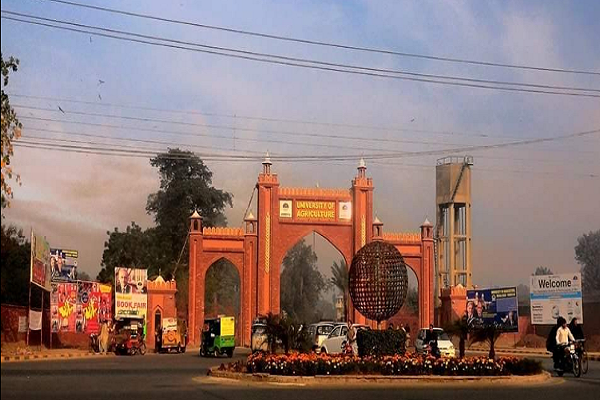
University of Agriculture Faisalabad History
The UAF was founded in undivided Punjab in 1906 as 1st major institute of agricultural education. Pakistan was an agricultural country at the time of independence. Agriculture continues to be the backbone of the country’s economy despite subsequent development and industrialization.
After independence in 1947, the Pakistani Government made a National Commission on Food & Education to improve the existing system of agriculture and make policies for maximizing agricultural potential. The commission argued in favor of establishing an agricultural university for education and research. The Punjab Agricultural College & Research Institute was upgraded in 1961 to transform it into an agricultural university.
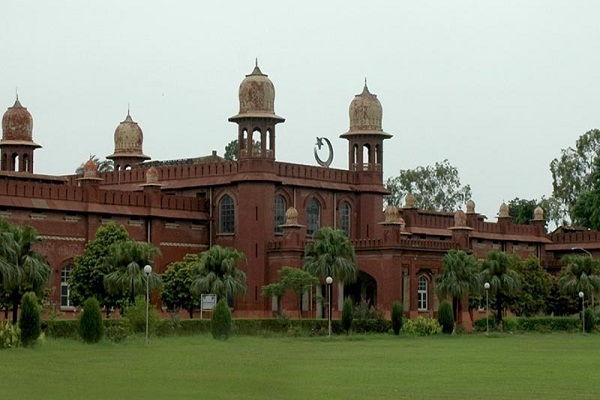
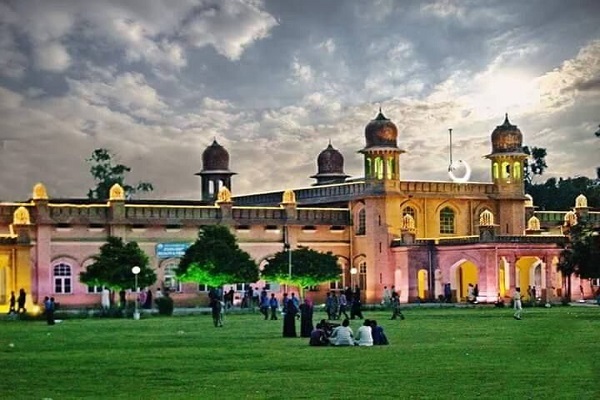
Sir Louis Dane, Lieutenant at that time and Punjab Governor laid the foundation stone for the 1st university established by the British Government in 1906. The campus is spread on an area of 1,950 acres. The new campus is surrounded by lush green plants and its monolithic blocks are constructed in a modern style. The old campus is a symbol of traditional and skilled Muslim architecture.
Faculties and Departments
UAF has seven faculties, eleven institutes, and twenty-nine departments.
1- Faculty of Agriculture
This faculty is the largest in UAF both in terms of students’ strength and infrastructure. The faculty train students practically and strengthens its research projects through farms, PARS (Post-Graduate Agricultural Research Station), Computer Lab, Meteorology Cell, Clinic for Plant Health, and SARC (Saline Agricultural Research cell).
The syndicate hall in the faculty is mostly used for arranging meetings with alumni, stakeholders, and farmers. A four-year degree program BSc Hons Agriculture Sciences is offered at this faculty. During the 1st four semesters of this degree, students are taught common courses and after completing four semesters they have to choose a major before the start of the fifth semester.
Departments in the Faculty of Agriculture
- Agronomy
- Entomology
- Plant Pathology
- Crop Physiology
- Forestry and Range Management
- Plant Breeding and Genetics
Institutes in the Faculty of Agriculture
- Soil & Environmental Sciences
- Horticultural Sciences
2- Faculty of Veterinary Science
Since 1962, the faculty is working for boosting the production of poultry and livestock. Until now, the faculty has trained 180 PhDs, 2974 M.Phil. or MSc (Hons.) and 3853 DVM (Doctor of Veterinary Medicine) graduates. Animals are treated at the Animal Reproduction clinic and Veterinary Hospital, which also deals with gynecological issues.
The clinical researchers have started outreach programs in several villages with mobile clinics. Pharmacologists have conducted researched on medicinal plants and have introduced several herbs having antiulcer, hepatoprotective, antidiabetic, and antibiotic activities.
Departments in the Faculty of Veterinary Science
- Pathology
- Anatomy
- Parasitology
- Pharmacy
- Theriogenology
- Clinical Medicine and Surgery
Institutes in the Faculty of Veterinary Science
- Physiology & Pharmacology
- Microbiology
3- Faculty of Sciences
When a new educational policy was introduced in 1974, the Faculty of Sciences was established. It has nine departments and is currently the University’s second-largest faculty. This faculty is offering MSc and M.Phil. degree programs in the fields of Botany, Biochemistry, Computer Science, Chemistry, Physics, Zoology, and Fisheries and Statistics.
Additionally, Ph.D. degree programs are offered in the fields of Chemistry, Botany, Zoology and Fisheries, and Biochemistry. MBA (Regular/Executive), M. Com, and MBIT degrees are also offered.
Departments in the Faculty of Sciences
- Chemistry
- Botany
- Biochemistry
- Computer Science
- Physics
- Zoology, Fisheries & Wildlife
- Islamic Studies
- Mathematics & Statistics
- Humanities & Linguistics
4- Faculty of Animal Husbandry
The Faculty is offering thirty-nine courses at undergraduate and thirty-nine courses at the post-graduate level in addition to short courses. The degree programs including BSc (Hons.) Dairy Science and BSc (Hons.) Animal Sciences are offered in this faculty.
Students of Food Sciences, BSc (Hons.) Agri., and DVM could also enroll in supporting courses here. The faculty comprises four departments and all of these departments are offering MSc and Ph.D. leading post-graduate programs.
The Faculty’s mission is to modernize poultry and livestock farming to increase the production of animal-derived fiber and food, benefiting both the farmers and the country. There is an ASIT (Animal Science Information Technology) Lab to facilitate students’ learning.
Departments in the Faculty of Animal Husbandry
- Animal Breeding & Genetics
- Animal Nutrition
- Livestock Management
- Poultry Science
Institutes in the Faculty of Animal Husbandry
- Animals & Dairy Sciences

5- Faculty of Agricultural Engineering and Technology
In 1961 the elevation of Punjab Agriculture College to the status of Agriculture University, Lyallpur led to the establishment of the Faculty of Agricultural Engineering and Technology. The faculty was particularly founded to train laborers to meet the increasing demands of mechanized agricultural practices in Punjab.
The coursework taught here leads to BSc in Food Engineering, Agricultural Engineering, Textile Technology; MSc in Fiber Technology, Food Technology and Agricultural Engineering, and Ph.D. in Agricultural Engineering and Food Technology.
Departments in the Faculty of Agricultural Engineering and Technology
- Farm Machinery & Power
- Irrigation and Drainage
- Food Engineering
- Fiber & Textile Technology
- Structures and Environmental Engineering
- Energy Systems Engineering
6- Faculty of Social Sciences
It was established in 1963 and was known as the Faculty of Agricultural Economics and Rural Sociology. In 2012, it was restructured and was named the Faculty of Social Sciences. In the past few years, it has responded timely and dynamically for the improvement of rural populations, need-based curriculum development, and greater food security.
The members are highly qualified and most of them have earned Ph.D. degrees from recognized institutes.
Departments in the Faculty of Social Sciences
- Rural Sociology
- Continuing Education
Institutes in the Faculty of Social Sciences
- Business Management Sciences
- Agricultural and Resource Economics
- Agricultural Extension and Rural Development
7- Faculty of Food Nutrition and Home Sciences
It is aimed at providing quality education to its students and developing innovative techniques to combat national and international challenges in human nutrition, food safety, and food security. NIFSAT (National Institute of Food Science & Technology) at UAF is the 1st and only Institute of Food Science and Technology in Pakistan.
NIFSAT is primarily focused on applying the principles of Food Sci. and Tech in food preservation processing, and handling to meet the demands of the rapidly expanding food industry. The Home Sciences Institute is working in the field of Science & Humanities for the achievement of well-being and welfare of the family.
Institutes in the Faculty of Food Nutrition and Home Sciences
- NIFSAT (National Institute of Food Science and Technology)
- Home Sciences
University of Agriculture Faisalabad Programs
Diploma and Certificate courses
The university is offering the following diploma programs for boys and girls:
- Diploma in the Arabic Language
- Livestock Assistant Diploma
- Poultry Assistant Diploma
- Post-Graduate Diploma in Food Science
- Diploma in Computer Science
- Mali Class
- T. Agri.
- Diploma for Girls in Rural Home-Economics
Agriculture University Faisalabad Courses
Some of the short courses that UAF offers are:
- Spoken English
- Tree Plantation
- Poultry Health
- Bee Keeping
- Word Processing
- Tunnel Farming
- Fish Farming
- Hand Knitting
University of Agriculture Faisalabad Admissions
UAF admission news is published in newspapers and is also posted on its website. Students can check the website to get details about eligibility criteria, the number of available seats, last date of admission, entry test dates, and entry test results. University of Agriculture Faisalabad merit lists are also uploaded on its official website.
University of Agriculture Faisalabad Fee Structure
The University of Agriculture Faisalabad fee structure depends on degree level i.e., undergraduate, postgraduate, border and non-border status, morning or evening program, and department. The fee structure is revised from time to time.
General Fee Structure
- BSc (Hons.)
Non-Boarder-Rupees 23,100/semester
Boarder-Rupees 33,600/semester
- MSc (Hons.)
Non-Boarder-Rupees 36,500/semester
Boarder-Rupees 46,900/semester
- Phil.
Non-Boarder-Rupees 36,500/semester
Boarder-Rupees 46,900/semester
- PhD
Non-Boarder-Rupees 53,200/semester
Boarder-Rupees 63,200/semester
University of Agriculture Faisalabad Sub Campuses
1- Okara Sub-Campus
The district Okara is highly recognized for its agricultural production, especially potato and maize crops. Keeping in view this agricultural potential of the district a sub-campus of UAF was established in Okara. This sub-campus is spread on an area of seventy-seven acres.
2- Toba Tek Singh Sub-Campus
On 5th June 2005. Toba is 2nd biggest poultry hub. So, it was the need of the hour to disseminate poultry education to farmers and produce highly-qualified poultry science professionals. So, a sub-campus of UAF was established in Toba Tek Singh on 5th June 2005.
3- Burewala Sub-Campus
This sub-campus of UAF was founded in district Vehari in order to spread agricultural research throughout Pakistan, particularly in Punjab’s southern region.
University of Agriculture Faisalabad Achievements
- In 2015, the Higher Education Commission ranked the University of Agriculture Faisalabad first in the discipline of Agriculture & Veterinary Sciences and overall fourth in Pakistan.
- Shanghai Ranking 2019 ranked it at 127 in the fields of life science & agricultural science.
- In terms of research power, the university ranked among the top five institutes in Pakistan.
University of Agriculture Faisalabad Address
UAF is located near Al-Khidmat Police Markaz at Jail Road, Faisalabad.
Frequently Asked Questions
Is Agriculture University private or government?
UAF is a government sector institute.
Which programs are offered by Agriculture University Faisalabad?
UAF is offering BSc, BA, BSc (Hons.), B.Ed., M.Ed., MSc (Hons.), M.Phil., MSc, and Ph.D. programs.
How many marks are required for admission in UAF?
50% marks in intermediate are required for admission in BSc (Hons.) and 2.5 CGPA is required for taking admission in M.Sc. (Hons.)/ M.Phil. The candidates applying for the Ph.D. program have to clear GRE with 70 percent marks.
How can I get admission in Agriculture University?
After the admissions are opened, one can apply for admission both by visiting the university or through the online admission portal of the university. The candidate has to fill out the application form, submit the entry test fee to the bank mentioned, appear in the entrance test conducted by the university, attach all documents with the filled application form, and submit in the admission office at the university.
Which documents are required for admission in UAF?
Attested photocopies of the student’s CNIC, father’s CNIC, result cards of the previous degree, domicile, passport size photographs, and affidavits are required for UAF admission.
Social Media Handle
]]>Many students and fresh graduates are on the search for universities that are offering online education. The need for online education arises when students are unable to take part in on-campus studies due to the following reasons;
- They cannot travel distances
- Different cities
- Travelling accommodations
- High education fees for on-campus classes etc.
In this article, you will be able to decide which university is the perfect option for you to continue your respective education program while taking online classes at your home. Luckily, Pakistan is offering numerous educational institutes and universities that offer online education to their students with cheap education fees.
1- Allama Iqbal Open University
The university is public to the people and was established in 1974. Allama Iqbal Open University is ranked as the second-highest education institute with an annual selection of more than 1 million students. Furthermore, there are 44 regional campuses of the university throughout Pakistan. It has numerous campuses located in different cities.
Campuses
- Faisalabad Millat Road
- Islamabad
- Bahawalpur
- Rahim Yar Khan
- Ghazi Khan
- Multan
- Dera
It has different departments and faculties that you might want to know.
Faculty of Arabic and Islamic Studies
The faculty was founded in 1974 and modified as the faculty of Islamic Studies and Arabic in 1998.
- Department of Arabic Language and Literature
- Department of Hadith and Seerah
- Department of Islamic Law
- Department of Quran and Tafseer
Faculty of Education
The faculty of Education was established in 1984 to improvise the education at the level of schools.
- Department of Adult and Continuing Education
- Department of Educational Planning and Management
- Department of Distance and Non-Formal Education
- Department of Special Education
- Department of Science Education
- Department of Teacher Education (Secondary, Elementary)
Faculty of Sciences
Founded in 1982 it has the following departments;
- Department of Biology
- Department of Botany
- Department of Agricultural Sciences
- Department of Information Technology
- Department of Chemistry
- Department of Engineering and Technology
- Department of Home and Health Sciences
- Department of Environmental Sciences
- Department of Physics
- Department of Mathematics and Statistics
- Department of Telecommunications
Faculty of Social Sciences and Humanities
It was established in 1982 with 16 departments of the faculty.
- Department of Business Administration
- Department of Commerce
- Department of Economics
- Department of Management Sciences
- Department of History
- Department of Mass Communication
- Department of Iqbal Studies
- Department of Library and Information Sciences
- Department of Pakistani Languages
- Department of Pakistan Studies
- Department of Gender and Women’s Studies
2- Preston University
The university is private in Pakistan and was first established as the School of Business and Commerce in 1984. The main campus of Preston University is in Kohat. The university became the first private university in Pakistan and now it is ranked as one of the largest branches of campuses throughout Pakistan.
Campuses
- Islamabad
- Karachi
- Kohat
- Lahore
Preston University Faculties
- Faculty of Computer Sciences
- Faculty of Education
- Faculty of Management and Sciences
- Faculty of Psychology
- Faculty of Economics
- Faculty of Mathematics
- Faculty of Social Sciences
- Faculty of Natural and Applied Sciences
- Faculty of Nano Science and Technology
3- Comsats University
Comsats University was first known as Comsats Institute of Information and Technology. The university serves as both a multi-campus and public university. The popular and number one degree offered by the university in Pakistan is Electrical Chemical Engineering.
It was established almost 25 years ago in 1998. The total number of undergraduate and post-graduate students enrolled in the university is approximately 40,000.
Campuses
Being a multi-campus university, it has its campuses spread out throughout Pakistan.
- Lahore
- Islamabad
- Abbottabad
- Sahiwal
- Chak Shahzad
- Vehari
- Attock
- Wah
These campuses were built at a time difference of 1-2 years. Abbottabad campus was inaugurated in 2001, Attock campus followed its path and opened in 2004. Moreover, once the Abbottabad campus flourished, the university had built another campus called the Vehari campus in 2008. The campus initially started with only 14 programs and 3 academic blocks.
Similarly, the Lahore campus was established in 2002. It also includes various faculties or departments.
Faculty of Information Science and Technology
- Department of Health Informatics
- Department of Computer Science
Faculty of Business Administration
- Department of Management Sciences
- Department of Humanities
- Department of Development Studies
- Department of Economics
Faculty of Engineering
- Department of Civil Engineering
- Department of Chemical Engineering
- Department of Mechanical Engineering
- Department of Electrical and Computer Engineering
Faculty of Science
- Department of Statistics
- Department Biotechnology
- Department of Meteorology
- Department of Physics
- Department of Biosciences
- Department of Pharmacy
- Department of Chemistry
- Department of Earth Sciences
- Department of Mathematics
- Department of Environmental Sciences
Faculty of Architecture and Design
- Department of Art and Design
- Department of Architecture
4- Aga Khan University
Aga Khan University was established in 1983 as Pakistan’s first private university. The university is a non-profit institution that is not affiliated with the Government of Pakistan. Moreover, the university began its expansion in different countries such as Afghanistan and the United Kingdom. In addition, Aga Khan University is also the largest private healthcare provider in East Africa and Pakistan.
Campuses
- Islamabad
- Karachi
- Gilgit
- Chitral
- Kenya (East Africa)
- Tanzania (East Africa)
- Uganda (East Africa)
- London (United Kingdom)
Departments/Faculties
- Department of Professional Education
- Department of Anesthesiology
- Department of Health Sciences
- Department of Biological and Biomedical Sciences
- Department of Development
- Department of Professional Education
- Department of Educational Development
- Department of Pathology and Laboratory Medicine
- Department of Medicine
- Department of Surgery
- Department of Woman and Child Health
5- Virtual University
Virtual University was established 19 years ago in 2002 and it was initiated as a public University. They also offer online education to post-graduate and undergraduate students across the country. Apart from that, the university teaches about Communication Technologies and modern Information.
It was established to promote long-distance education in both fields. The university is also known for its various top-class online lectures, classes, and materials available on the internet.
Campuses
- Azad Kashmir
- Islamabad Capital Territory
- Punjab
- Sindh
- Baluchistan
- Gilgit Baltistan
- Khyber Pakhtunkhwa
Degrees offered
- Bachelor’s Program of two years
- Bachelor’s Program of four years
- Master’s Program of 3.5 years (MA/MSc)
- Master’s Program of two years (MS/MPhil)
Faculties
- Faculty of CS and IT
- Faculty of Arts
- Faculty of Management
- Faculty of Education
- Faculty of Science and Technology
6- Bahauddin Zakariya University
The university was established 46 years ago in 1975 as a public university by the Government of Pakistan. The Bahauddin Zakariya University is also one of the largest universities in Punjab, Pakistan. Moreover, the university offers more than 55 different major fields of degree courses and includes:
Degrees Offered
- Biochemistry
- Engineering
- Business Administration
- Humanities
- IT Agriculture and Languages
- Pharmacy
- Law
- Art
The degrees offered by the university are recognized by the Higher Education Commission of Pakistan, Pakistan Pharmacy Council, and Pakistan Engineering Council.
Campuses
- Multan
- Layyah
- Vehari
- Lodhran
Faculties
- Faculty of Arts and Social Sciences
- Faculty of Islamic Studies and Languages
- Faculty of Pharmacy
- Faculty of Engineering and Technology
- Faculty of Agricultural Sciences and technology
- Faculty of Commerce, Law and Business Administration
- Faculty of Science
- Faculty of Veterinary Sciences
7- University of Engineering and Technology
The University of Engineering and Technology is the oldest university in Pakistan that was established almost a century ago. It is located in Lahore, Pakistan, and is popular for teaching courses of Science, Engineering and Mathematics, Technology. Moreover, it is a public university.
Campuses
- Gujranwala
- Sheikhupura District
- Faisalabad
- Narowal
It has different faculties or departments.
Faculty of Civil Engineering
- Department of Civil Engineering
- Department of Architectural Engineering and Design
- Department of Environmental Engineering and Research
- Department of Transportation Engineering and Management
Faculty of Earth Sciences and Engineering
- Department of Mining Engineering
- Department of Geological Engineering
- Department of Gas and Petroleum Engineering
Faculty of Natural Sciences, Humanities, and Islamic Studies
- Department of Mathematics
- Department of Chemistry
- Department of Islamic Studies
- Department of Physics
- Department of Humanities, Modern Languages, and Social Sciences
- Department of Business and Management
Faculty of Architecture and Planning
- Department of Architecture
- Department of Product and Industrial Design
- Department of Regional and City Planning
Faculty of Chemical, Polymer, and Metallurgical Engineering
- Department of Process and Polymer Engineering
- Department of Chemical Engineering
- Department of Process and Polymer Engineering
Faculty of Electrical Engineering
- Department of Computer Engineering
- Department of Computer Science
- Department of Electrical Engineering
Faculty of Mechanical Engineering
- Department of Automotive Engineering
- Department of Mechatronics and Control Engineering
- Department of Mechanical Engineering
- Department of Industrial and Manufacturing Engineering
8- University of Peshawar
The University of Peshawar was established 71 years ago in 1950 and it is a public university by the Government of Pakistan. The university is located in Peshawar, Pakistan. Moreover, it is the highest-rated university in the country. Furthermore, it offers programs for both undergraduate and post-graduate students with approximately 13,000 students currently attending the university.
Campuses
- Peshawar
- Bara Gali Campus
Departments
- Department of Psychology
- Department of Computer Science
- Department of Journalism and Mass Communication
- Department of Law
- Department of Education and Research
The national organizations present at the Peshawar campus include the Pakistan Council of Industrial and Scientific Research and Pakistan Forest Research, etc. Moreover, students can view their websites or visit the university to get enrolled for online education.
9- University of Central Punjab
The University of Central Punjab was established in 2002 as a private university by the Government of Pakistan. It is affiliated with more than 3 different councils of Pakistan including the Pharmacy Council of Pakistan and Pakistan Bar Council. Moreover, the location of the university is in Lahore, Pakistan.
It is a branch of Punjab Group of Colleges and it underwent restructuring in 2004.
Campus
- Lahore, Pakistan
Faculties
- Faculty of Arts and Social Sciences
- Faculty of Pharmacy
- Faculty of Media and Communication Studies
- Faculty of Life Sciences
- Faculty of Engineering
- Faculty of Law
- Faculty of Information Technology
10- Pakistan Institute of Modern Studies
Pakistan Institute of Modern Studies is an organization and a project of the Pakistan Educational Network. Moreover, it was established 24 years ago in 1997 by a group of potential and professional personalities in the fields of socio-economic and planning Development.
The organization focuses on training and providing quality educational services for the students. They have community base training centers in Information Technology that help and enable the students to broaden their minds and bring socio-economic changes. Moreover, it has risen as a new trendsetter in this age of technology.
In addition to that, the Pakistan Institute of Modern Studies is a private institute established in order to develop an interest and awareness in the young minds of the students to educate themselves in the fields of Technical, Medical, Information technology, Engineering, and Management.
Online Registration
The students interested in taking part in the courses offered by the Pakistan Institute of Modern Studies can register for their relevant courses through the online registration process offered by the organization through their website.
Campus
- Islamabad
Programs offered
- Software Engineering
- Supply Chain Management
- Educational Planning and Management
- Dermatology
- Chemical Technology
- Laboratory Technician
- Electrical Technology
- Public Health
- Criminology
- Project Management
- Civil Technology
- Education (Health and Physical)
- Mechanical Technology
- Finance and Accounting
- Telecommunication
- Information Technology
- Human Resources Management
So, where will you find the best universities respective to your location? Well, you will find them almost anywhere, even near to your place! There are top 10 Universities in Pakistan that will be bound to accept eager and hardworking students into their prestigious institutes of education.
Apart from that,
The universities, medical colleges, engineering colleges, law schools, etc., are the most respected and reputable institutes in the academic and education communities. Yet, they continue to offer inspiring Master’s, Ph.D., and Master’s programs for intelligent, hardworking students. Therefore, you are free to choose from some of the most highly appreciated degrees in the top universities in Pakistan.
Quaid-i-Azam University
Quad-I-Azam University is located in Islamabad, and it was created in 1967 as the University of Islamabad. With four faculties and nine research institutes, Quaid-I-Azam University is one of Pakistan’s most prominent and highest-ranking public universities, offering Ph.D. and MPhil degrees along with Masters and now undergraduate programs. The faculties and departments are below:
1. Faculty Natural Science
- Department of Computer Science
- Department of Earth Science
- Department of Chemistry
- Institute of Information Technology
- Department of Mathematics
- Department of Physics
- Department of Statistics
- Department of Electronics
2. Faculty of Medical Science
- Army Forces Post Graduate Medical Institute
- Al-Shifa Eye Trust Hospital Rawalpindi
- Quaid-E-Azam Postgraduate Medical College, PIMS
- Federal Medical & Dental College
- Health Services Academy, Islamabad
3. Faculty Biological Science
- Department of Biotechnology
- Department of Pharmacy
- QUA School of Medicine
- Department of Plant Sciences
- Department of Animal Sciences
- National Center for Bioinformatics
- Department of Biochemistry
- Department of Environmental Science
- Department of Microbiology
4. Faculty of Social Science
- Quaid-i-Azam School of Management Sciences (QASMS)
- School of Politics and International Relations
- Taxila Institute of Asian civilizations
- School of Law
- Department of Sociology
- Department of Defense & Strategic Studies
- Department of Anthropology
- Department of Linguistics
- Department of Psychology
- Department of History
- Department of Economics
Comsats University Islamabad
Comsats University Islamabad had changed its name from Comsats Institute of Information Technology. Furthermore, it is a public and multi-campus university. The most appreciated degree offered by Comsats University Islamabad is Electrical Chemical Engineering ranked at number one in Pakistan.
Moreover,
The university was formed in 1998, almost 24 years ago, and there are approximately 40,000 students enrolled in the campus of Islamabad, with 30,000 undergraduates and 9,500 post-graduate students.
Campus of Comsats University
The campuses of the university are spread out in different areas because it is a multi-campus university.
- Lahore
- Islamabad
- Chak Shahzad
- Vehari
- Attock
- Wah
- Abbottabad
- Sahiwal
The campus in Abbottabad was built in 2001, three years after the main campus of Islamabad. The Attock campus followed through and opened in 2004, again three years after the successful establishment of the Abbottabad campus. Similarly, after four years of establishment of the Attock campus, the Vehari Campus of Comsats opened in 2008 with only fourteen programs and three academic blocks. Finally, the Lahore campus was founded in 2002, right after the opening of the Abbottabad campus.
Overview of Comsats Lahore Campus
- 512 number of Faculties
- D. offering faculties are 227
- 37 total programs are being offered on the campus
- A total of 7,200 students are enrolled
Aga Khan University
Created in 1983, Aga Khan University is Pakistan’s first private university. It is a non-profit institution. In 2000, it expanded to other countries, including the United Kingdom and Afghanistan. It is also one of the largest private healthcare providers in Pakistan and East Africa.
While it started as a health-sciences university, it has expanded. It is now beginning programs in teacher education, journalism, early childhood development, the history of Muslim civilizations, and public policy. In addition, the university aims to offer an undergraduate liberal-arts program and establish different graduate schools.
There are currently two institutes in Aga Khan University:
1. Institute of Educational Development
Pakistan and East Africa
In Karachi and East Africa, the Institute for Educational Development is a center for developing teachers, education managers, policymakers, and educators. AKU-IED also offers Ph.D. and Masters of Education.
1. Institute for the Study of Muslim Civilization
The Institute was founded in 2002 and accepted the first graduate students in 2006. It offers a Master of Arts in Muslim Cultures, and it’s accredited by the Higher Education Commission of Pakistan and is regulated by the Quality Assurance Agency from the UK.
National University of Sciences and Technology
National University of Sciences and technology is also commonly known as NUST University, which was established in 1991, 29 years ago. It is under the administration of the Pakistan Armed Forces, and the main campus is located in Islamabad, Pakistan.
Apart from that,
The university is offering graduate and undergraduate degrees that include professional and doctoral degrees. The campuses of NUST are scattered in different locations in Pakistan.
- Islamabad NUST Campus in H-12
- Rawalpindi NUST Campus (MCS, CEME)
- Risalpur Campus NUST (CAE, MCE)
- NUST Campus in Quetta (NBC)
- Karachi NUST Campus (PNEC)
Degrees offered by NUST are BS/BSE, Ph.D., MS/M Phil etc., with countless disciplines such as Software Engineering, Physics, Geoinformatics Engineering, Economics, etc.
University of Punjab
The University of Punjab, also known as Punjab University, is a public research university situated in Lahore and Punjab. It was the fourth university to be established by the British Colonial Authorities. It was established in 1882 and was completed in 1947. It offers BFA, BCS, BSc, BCom, BBA, MBA, MSc, MPhil, diplomas, and MD, MDS, and MS.
Faculties:
- Faculty of Commerce
- Faculty of Health Sciences
- Faculty of Law
- Faculty of Science
- Faculty of Pharmacy
- Faculty of Islamic Studies
- Faculty of Economics and Management Sciences
- Faculty of Oriental Learning
- Faculty of Engineering & Technology
- Faculty of Behavioral and Social Sciences
- Faculty of Life-Sciences
- Faculty of Arts and Humanities
- Faculty of Education
Constituent Colleges:
- Punjab University Law College
- University Oriental College Lahore
- College of Engineering & Emerging computing
- College of Art and Design
- College of Earth and Environmental Sciences
Lahore University of Management and Sciences
Lahore University of Management and Sciences is also commonly known as LUMS University, and it is a private university. Moreover, it is situated in Lahore and was founded in 1984. With over 5,000 students enrolled on the campus, LUMS university is also one of the top universities in Pakistan.
Apart from that,
LUMS University is offering both graduate and undergraduate programs to the students.
Undergraduate programs
- BSc (Honors) Management Science
- BSc (Economics and Mathematics Joint Major)
- BA (History, English)
- BSc (Anthropology and Sociology)
- BS Computer Science
- BS Chemistry
- BS Chemical Engineering
- BS Physics
Graduate programs
- MBA
- Executive MBA
- MS Technology Management and Entrepreneurship
- MS Business and Public Policy
- MS Financial Management
- MS Healthcare Management and Innovation
- MPhil Education Leadership and Management
- MS Economics
University of Peshawar
The University of Peshawar, or Peshawar University, was created in 1950 and offered undergraduate, post-graduate, and doctoral studies programs. It is one of the oldest universities in the province and is ranked as one of the highest-rated universities in the country. The University of Peshawar is known for its research in natural sciences, social sciences, and medical sciences, with its eight research centers.
Departments:
- Department of Pharmacy
- College of Home Economics
- Jinnah College for Women
- Department of Psychology
- Law College
- Department of Journalism and Mass Communication
- Institute of Management Studies
- Department of Computer Science
- Quaid-E-Azam College of Commerce
- Institute of Education and Research
University of Agriculture
The University of Agriculture is a public university situated in Faisalabad, Pakistan. It is the oldest agricultural Institute in South Asia and is ranked 4th in Pakistan. It was created in 1906 before Pakistan gained its Independence but was reestablished in Pakistan in 1961. It has Bachelor’s degrees, doctorates, and MSc.
Faculties
- Faculty of Veterinary Science
- Faculty of Agriculture
- Faculty of Social Sciences
- Faculty of Animal Husbandry
- Faculty of Agricultural Engineering and Technology
- Faculty of Humanities
Departments
- Department of Food Engineering
- Department of Crop Physiology
- Department of Irrigation and Drainage
- Department of Plant Pathology
- Department of Farm Machinery, Power, and Fiber Technology.
- Department of Agronomy
- Department of Wildlife and Range Management
- Department of Structural and Environmental Engineering
- Department of Energy Systems Engineering
- Department of Plant Breeding and Genetics
International Islamic University
It is an Islamic University also called IIUI, and it was founded in 1980. It still remains a valuable source of higher education in Pakistan. The university is public and has around 2,000 to 2,500 academic staff with 30,000 students. IIUI is also affiliated with the Higher Education Commission Council, just like the rest of the universities mentioned, and it is located in Pakistan.
Faculties
- Faculty of Engineering and Technology
- Faculty of Management Sciences
- Faculty of Basic and Applied Sciences
- Faculty of Arabic
- Faculty of Shariah and Law
- Iqra College of Technology
- Faculty of Islamic Studies
- Faculty of Social Sciences
- Faculty of Languages and Literature
Degrees offered by IIUI:
- Anthropology
- MA Arabic
- BS Arabic
- MSc/BS Mathematics
- MSc/BS Statistics
- BS Environmental Sciences
- BBA
- MBA
- MBA Executive
- BS Commerce, Project Management, Accounting and Financing
Air University
Air University is a professional military educational university and was established in 1946. It offers Master of Strategic Studies, Master of MOAS, Doctorate in Philosophy in Military Strategy, and a Master of Military Strategy.
Military Education
- Enlisted Heritage Research Institute
- NCO Academies
- First Sergeant Academy
- Airman Leadership School
- Air Command and Staff College
- Squadron Officer School
- Air Force Senior Noncommissioned Officer Academy
- Air War College
Air University is also offering some of the highly appreciated programs and degrees that are recognized by a lot of business institutions in the country.
]]>The University of the Punjab is a university located in Lahore, Pakistan. The university is commonly known by the name of Punjab University, and it was established in October 1882. Ram Singh designed the architecture of the university in 1911, and it is the first oldest public university in Pakistan.
Apart from that, it is a public university, and Chaudhary Muhammad Sarwar is its chancellor. Currently, there are more than 45,000 students enrolled in the University of Punjab with 1000+ staff and faculty members. It is surprising to know that the university was established by the British government in 1882 during the Simla deputation held at Simla. Thus, it became the fourth university to be verified by the government of British in the Indian subcontinent.
Furthermore, Gottlieb Wilhelm founded the University of Punjab, and since the formation of the university, it has served almost all of the educational needs of Punjab.
Punjab University Campuses
The university is affiliated with the Pakistan Engineering Council, Higher Education Commission of Pakistan, Pakistan Bar Council, Pakistan Council for Architects and Town Planner, and Pharmacy Council of Pakistan. In addition to that, there are multiple branches of the university located in Jhelum, Khanspur, Lahore, and Gujranwala.
Punjab University Lahore Campus
The Lahore Campus consists of 13 faculties, including 83 academic departments and institutes, and research centers. It is also known by the name Allama Iqbal Campus, which sits at the center of Lahore. The name was taken from the fore fathers of Pakistan who was a famous poet.
As mentioned before, the 13 faculties in the Lahore campus university are as follows;
- Faculty of Behavioral and Social Sciences
- Faculty of Education
- Faculty of Health Sciences
- Faculty of Economics and Management Sciences
- Faculty of Engineering and Technology
- Faculty of Arts and Humanities
- Faculty of Islamic Sciences
- Faculty of Commerce
- Faculty of Pharmacy
- Faculty of Oriental Learning
- Faculty of Law
- Faculty of Life Sciences
- Faculty of Sciences
Apart from that,
A new campus was built and named after Muhammad Ali Jinnah who was the founding father of Pakistan. The campus is 12 km away from the main campus.
Punjab University Gujranwala Campus
Here in the Gujranwala Campus, the university focuses on fields of Commerce, Economics, Law, Science. Management Sciences and all conduct teachings on the campus. Dr. Niaz Ahmad is the Vice-Chancellor of the main campus, with Dr. Salman Rizvi as the acting Director. Amongst the five campuses of the University of Punjab, the Gujranwala campus is ranked 3rd for being the oldest.
The type of education that is available on the campus is undergraduate, graduate, post-graduate programs. Therefore, there are four central departments.
Punjab University Campus in Khanspur
The third campus is also known as the Sir Syed Campus. It is a unique field facility that provides and supports various education opportunities, research projects, and study tours across the country. Moreover, Khanspur is a prominent settlement in Ayubia and is situated on the west side of Murree, roughly 23km.
Punjab University Jhelum Campus
The Jhelum campus was inaugurated in 2012 and offered education closely related to the departments of Economics, Management Sciences, Commerce, Law, and Computer Science.
Punjab University Fee Structure
The fee structure is different as per different departments, but the general fee structure for the affiliated college students that people should keep in mind is as follows;
- A. / associated degree in Arts 5,930 PKR
- Sc. / associated degree in science 6,840 PKR
- BFA both parts 7,500 PKR
- BCS/BSCS 7,990 PKR
- Sc. Hons Per semester fee is 5,140 PKR
- F.A Part 3 and M.F.A fee is 8,525 PKR
- Sc. Medical Laboratory tech 7,990 PKR
- Com / associated degree in Commerce 6,350 PKR
- B.A/ M.B.A 7,990 PKR
- Sc. Part one and two 7,990 PKR
- Phil. / associated degree in Dentistry 16,490 PKR
- Diploma in Medical 15,490 PKR
- D. MDS. M.S. part two 34,300 PKR
- B.B.S / Pharm-D 1-5th 12,485 PKR
Punjab University Admission
A notification has been uploaded regarding admissions in various departments for the year 2021-2022. The minimum requirements for admission in Ph.D. with accordance to the university is as follows;
Students should have a qualification of B.S. (Hons) 4 years / M.A. B.Sc. (Hons) 4 years M.A./ M.Sc. in Engineering. In addition, the students should have a degree equivalent from a university that the Higher Education Commission recognizes with at least 16 years of education and 130 credit hours. The minimum CGPA should be greater than four as per the HEC and P.U. rules.
Moreover,
MS/ M.Phil. / M.Sc. in engineering or Hons. The students should have any of these degrees or equivalent degrees with a minimum CGPA greater than three per the HEC and P.U. rules.
Eligibility Criteria for M.Phil. / MS/ PhD Admissions
- A written test has to be qualified by the student in which the candidate must score 70% for Ph.D. and 50% for M.Phil.
- The information for admission regulations can be collected from the respective department, College, School, Center, or institute.
- The students that are waiting for their results of B.S. 8th semester or M.A / MS/ MPhil or M.Sc. 4th semester can apply beforehand and submit their result once notified by the Controller of Examinations before the date of the test. Students failing to comply will not be considered for admission.
- Due to the new changes in the policy guidelines for a Ph.D., the Ph.D. scholar shall have to complete at least 48 credit hours of course work. The majority of the credit hours will be conducted through regular classes.
- The students that have already taken part in the degree will have their credit hours added to the current curriculum and thus will have to complete all of the requirements for the award of the degree during their studies. Once the requirements are completed by the Ph.D. scholars, the university will award them with their respective degrees.
- Those students who could not maintain a CGPA of 3 throughout their Ph.D. will be awarded an MPhil or M.S. degree. But the degree will not be awarded to the student who has a CGPA below 2.5.
- The students applying for Ph.D. are required to provide equivalence before admission.
Punjab University Results
For the convenience of students, the results related to examinations of different departments are uploaded on the website of the university. Other than that, students can visit their respective departments in order to get their degrees and results from within the university. Students that wish to view the results of the following subjects can access them through the website of the university;
- LLB parts 1-3
- Doctor of Pharmacy
- BS four years degree program of affiliated colleges
- Ed.
- A. B.Sc.
- A./ M.Sc.
- MBBS
- Com. part 1 and 2
- LLB (a program of five years)
- S. and or BBA degree
- Ed.
- Professional Degree
- Phil.
Punjab University Merit list 2020 has also been uploaded to their website. Therefore, students can view them with convenience.
Punjab University Past Papers
The past papers for the following degrees are available for viewing and downloading from the website of the university.
- Com.
- B.A
- S.Ed.
- A/ M.Sc.
- Doctor of Pharmacy (Pharm. D)
- MBA
- B. (first three years and five years)
- Sc. and BA
- BS Applied Geology
Students can go through the past papers of their respective degrees, and they can be familiarized with the types of questions asked in the exams. Students can also practice for their upcoming exams through the past papers that the university has provided to them through their website.
Punjab University Registration
Due to the Covid-19 pandemic that erupted in the mid-2020, the university had postponed the submission of registration forms for MSc/M.A. and other associated degrees in Commerce yearly examinations 2020. The extended dates for the registration forms have now been uploaded on the website of the university. Furthermore, to facilitate the students, the university has opened an option for registering online through their website. Thus, students can easily access the portal and register for Associate Degree in Arts/ Commerce / Science and M.A./MSc examinations.
Punjab University Contact Number
Email: [email protected]
Reception and Information Cell number: 0092-42-99233132
Phone Number for Registration branch: 00924231105
Phone Number for admissions in B.A and B.Sc. (Hons.): 0092-42-99230259
For Admissions in M.A/M.Sc.: 0092-42-99230259
Quaid-i-Azam Campus
P.O. Box Number: 54590 Lahore Pakistan
Allama Iqbal Campus
P.O. Box Number: 54000 Lahore, Pakistan
Gujranwala Campus
Address: Rawalpindi Bypass Gujranwala, Near Ali Pur Chowk, Pakistan
Phone Number: 0092-55920122
Fax Number: 0092-559201223
Punjab University Website
Website: pu.edu.pk
Frequently Asked Questions
How to apply for M.Phil. in Punjab University?
Students can apply online for the degree of M.Phil. from the website of the university before the deadline.
How to get NOC from Punjab University?
The migration or NOC form can be downloaded and viewed from the website of the university, and the fee is 2,720 PKR for Normal and 5,460 PKR for Urgent Processing.
How to apply in Punjab University?
Students can quickly fill the admission form from the Punjab University website and submit it before the deadline.
Is Punjab University government or private?
It is a public university and an autonomous body under the Government of Punjab.
What is the fee structure of Punjab University?
The fee structure is different concerning the various offered programs and degrees offered by the university.
How much percentage is required for Punjab University?
Candidates that have scored a minimum of 50% marks can apply for admission.
]]>Moreover, university has 45 buses and 3 coaches for providing transport facilities to staff and students. Currently, University has fifty-one departments. Three hundred eighty-nine faculty members hold doctorate degrees. A wide range of degree programs is offered, including MBA, M.Sc, M.Phill, M.Com, M.A., and PhD.
Apart from these degrees University has also introduced a four-year undergraduate in Commerce, Science, Pharmacy, English Literature & Linguistics, Business, and Engineering. This article has every information about the university, including Bahauddin Zakariya University History.
| Title | Description |
| Name: | Bahauddin Zakariya University |
| Type: | Public |
| Main Branch: | Multan |
| Sub Branches: | Layyah, Vehari, Lodhran, and Muzaffargarh |
| Motto: | Knowledge is Power |
| Chancellor: | Governor of Punjab |
| Founded: | 1975 |
| Affiliation: | HEC |
| Website: | https://www.bzu.edu.pk/ |

Bahauddin Zakariya University History
Multan has maintained its distinction as a center of education. A Muslim saint and religious scholar Hazrat Bahauddin Zakariya founded a school in theology in this city. Many scholars from different parts of the world came for research and studies.
The University of Multan was founded in 1975, according to an ‘Act of the Punjab Legislative Assembly.’ To give the honor to a great religious scholar university was named ‘Bahauddin Zakariya University’ in 1979. It is a public university that provides arts and science education.
As agriculture is the backbone of this area, its surrounding area produces excellent silver crop (cotton) and fruits such as dates, citrus, and mangoes-it was thought extremely important to educate human resources to resolve agricultural problems. In 1989, a College of ‘Agriculture’ was founded accordingly.
Vision
The University is striving to grow as a leading and distinctive institution and create a group of researchers, scholars, and academics engaged in a productive discussion that can generate policy-relevant understanding and knowledge on global, regional, and national issues.
Mission
The University’s main aim is to provide quality education and advanced research facilities for the people of Punjab’s Southern Region. This institute fulfills these three functions: examination, teaching, and affiliation.
Administration
The legislative or governing body of University is its Senate. The academic council is the leading academic body, while Syndicate is the Executive Body. Punjab’s Governor is Vice-Chancellor of the University, while Education Minister acts as Pro-Chancellor.
The Principal Academic and Executive Officer is the Vice-Chancellor, who gets assistance by Chairmen of the Departments, Deans of Faculties, Directors of the Centre, Controller Examinations, and the Registrar.

Number of Students
A total of 26659 students are pursuing a degree in different subjects; half of them are female.
Campuses
Sub campuses of BZU are located in Layyah, Vehari, Lodhran, and Muzaffargarh.
Extra-curricular Activities
RHEPS (Research and Higher Education Promotion Society)
The society promotes research activities among the University students.
LDS (Literary and Debating Society)
This society organizes poetic gatherings, declamation competitions, and debates, etc.
Ladies Club
The ladies club has created a friendly and warm atmosphere at the campus. It provides a platform for females to handle their issues and reveal their potential.
Dramatic/Cultural Society (CDS)
This society adds warmth and color to campus. The club organizes healthy and entertaining diversion by arranging skits competitions, trips, picnics, and concerts.
FSC (Foreign Student Club)
The club assists international students in communicating with local values and customs.
BDS (Blood Donor Society)
BDS maintains the record of all the blood donor students. In case of an emergency, society calls the required student for donations.
Sports Club
This club regulates and promotes games and sports at the campus. The facilities include hockey, cricket, basketball, football, and volleyball grounds. There are courts for Volleyball, badminton, and basketball.

Rules and Regulations
Display of University Cards
Display of university cards during campus timing is compulsory.
Smoking
The University campus is no smoking area, and smoking is not permitted except few allocated areas.
Wall Posting
Any painting, writing, spraying on campus walls is prohibited.
Dress Code
Following proper dress code is required by all the students.
Misbehavior
Any form of physical clash or verbal abuse would be considered gross misconduct.
Academic Departments
Faculty of Arts and Social Sciences
- Education Department
- School of Economics
- Department of Soil Sciences
- Criminology Department
- History Department
- Gender Studies Department
- Pakistan Studies Department
- Geography Department
- Political Science Department
- Interpersonal Relations Department
- Communication Studies Department
- Sociology Department
- Applied Psychology Department
- Philosophy Department

Faculty of Science
- Institute of Chemical Sciences
- Centre for Advanced Studies in Pure and Applied Mathematics
- Computer Science Department
- Information Technology Department
- Telecommunication Systems Department
- Physics Department
- Statistics Department
- Pure and Applied Biology Institute
- Molecular Biology and Biotechnology Institute
- Biochemistry Department
- Environmental Sciences Department
Faculty of Islamic Studies and Languages
- Arabic Department
- English Department
- Islamic Studies Department
- IRC (Islamic Research Centre)
- Urdu Department
- SASC (Saraiki Area Study Centre)
Faculty of Commerce, Law & Business Administration
- IMS (Institute of Management Sciences)
- AIBF (Alfalah Institute of Banking & Finance)
- Commerce Department
- Gillani Law College
Faculty of Pharmacy
- Pharmacy Department
Faculty of Veterinary Sciences
- Pathobiology Department
- Biosciences Department
- Clinical Sciences Department
- Livestock & Poultry Productions Department
Faculty of Engineering & Technology
- University College of Engineering and Technology
- Civil Engineering Department
- Institute of Advanced Materials
- Electrical Engineering Department
- Mechanical Engineering Department
- Building & Architectural Engineering Department
- Computer Engineering Department
- BZU College of Textile Engineering
Faculty of Agricultural Sciences & Technology
- Soil Science Department
- Agronomy Department
- Entomology Department
- Plant Breeding and Genetics Department
- Plant Pathology Department
- Horticulture Department
- Forestry and Range Management Department
- Institute of Food Science & Nutrition
- Agri. Business & Marketing Department
- Agricultural Engineering Department
Hostels
The following hostels are available for the accommodation of girls and boys:
For boys
- Usman Hall
- Abubakar Hall
- Umer Hall
- Ali Hall
- Abdul Sattar Edhi Hall
- Qasim Hall
- Hamza Hall
- Mohsin Hall
For girls
- Mariam Hall
- Fatima Hall
- Amna Hall
- Hajra Hall
- Ayesha Hall
- Zainab Hall
- Khadija Hall
Contact Information
Address: Bahauddin Zakariya University Bosan Road, Multan, Punjab
Ph# +92 (61) 9210071
E-mail: [email protected]
]]>